English| EUR
Suggested for you
More currencies
Choose a language
Animal Flower Cave is the only sea cave in Barbados open to visitors, carved from coral limestone at the island's northernmost point. Its name comes from the sea anemones that cluster in the tidal pools—early observers mistook them for flowers. This guide covers the cave's geological origins, its discovery, and the natural forces that shaped its chambers.
Quick answer
Animal Flower Cave formed over thousands of years as Atlantic waves eroded the coral limestone cliffs at North Point, creating chambers and tidal pools. The cave takes its name from the sea anemones—flower-like marine animals—found in the rock pools inside. It sits at the northernmost tip of Barbados, where the island's Scotland District meets the Atlantic, and remains the only sea cave on the island accessible to the public.
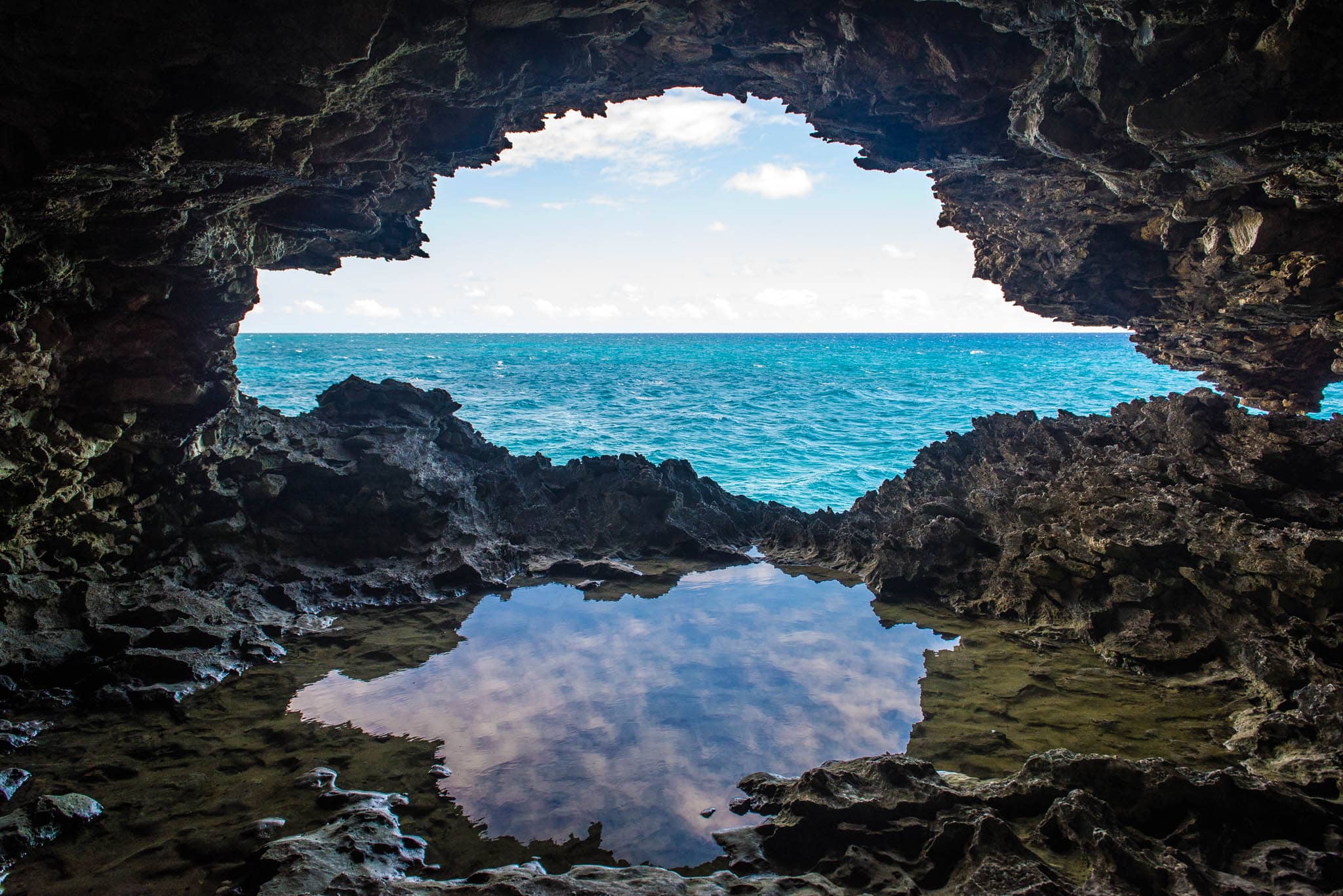
The cave owes its existence to the relentless action of the Atlantic Ocean on the coral limestone that forms Barbados' northern coast. Unlike the island's popular west coast beaches, the north shore faces open ocean, and centuries of wave action carved tunnels and chambers into the cliff face at North Point. The limestone itself is fossilized coral reef, part of the Scotland District's exposed geology—a rare window into the island's submarine origins. The name comes from the sea anemones that colonize the tidal pools inside the cave. Early visitors mistook these marine invertebrates for flowering plants, and the name stuck. The anemones remain a distinctive feature, their tentacles swaying in the shallow pools when the tide is low. The cave's chambers open directly to the ocean through natural windows and blowholes, and during high tide or rough seas, waves surge through the openings with considerable force. The interplay between ocean and limestone continues today—what visitors see is a work in progress, not a finished formation. Animal flower cave facts include its status as the only sea cave in Barbados accessible without specialized equipment. The cave sits at the island's northernmost point, where the Atlantic meets the Caribbean Sea, and the surrounding cliffs form part of the Scotland District's rugged coastline. The district itself is geologically distinct from the rest of Barbados, composed of older sedimentary rock and coral formations that predate the island's limestone cap. The cave's location made it a natural landmark for sailors navigating the passage between the Atlantic and Caribbean, and local fishermen used the area long before it became a visitor attraction. The interior chambers vary in height and light depending on the tide and weather. Natural skylights pierce the roof in several places, illuminating the pools and wet rock. During calm conditions, the tidal pools offer views of the seafloor through crystal-clear water, while storm swells can render the cave inaccessible. The cave's formation continues incrementally—each wave carries abrasive sand and salt, slowly reshaping the limestone. What makes the site compelling is not a static monument but an active intersection of geology, hydrology, and marine ecology, all concentrated in a space small enough to traverse in minutes but complex enough to reward careful observation.
“The cave's formation continues incrementally—each wave carries abrasive sand and salt, slowly reshaping the limestone.”
The best arrival window is 09:30–11:30 to avoid afternoon tour bus crowds and ensure access before potential daily closures. Visiting during this early timeframe allows for a quieter experience at North Point.
—
Early arrivals typically experience smaller groups and faster access.
Dry, 24°C–29°C
Clear skies offer better visibility for cave formations.
Humid, 25°C–31°C
Visiting mid-week helps avoid weekend resident traffic.
Verdict: Arrive between 09:30 and 11:30, ideally from Tuesday to Thursday, to experience the cave before the afternoon tour buses arrive.
The Animal Flower Cave operates on a consistent weekly schedule, remaining closed on Mondays and open throughout the remainder of the week.
The Animal Flower Cave is a natural sea cave located at North Point, which requires navigating a staircase for access. Due to the rugged coastal terrain and the descent into the cavern, the site is not suitable for individuals with limited mobility or wheelchair users.
The cave entrance is located at the base of a 27-step staircase.
Access to the interior of the cave requires descending 27 steps.
Facilities at this remote coastal location do not currently meet accessibility standards.
Visiting between 09:30–11:30 helps avoid the largest tour bus crowds.
The Animal Flower Cave is located at North Point in St. Lucy, representing the northernmost point of Barbados. It derives its name from the sea anemones found within its rock pools.
The name originates from the sea anemones that inhabit the cave's interior rock pools, which local guides often refer to as animal flowers. These marine animals retract into their pedestals when touched or disturbed.
The cave was formed by the relentless action of Atlantic Ocean waves carving into the coral limestone cliffs over thousands of years. This erosion has created the cavernous chambers visible today.
Situated at the northern tip of the island, the site marks the meeting point of the Caribbean Sea and the Atlantic Ocean. This location exposes the cave to high-energy wave activity.
The cave is composed of coral limestone, a sedimentary rock that makes up much of Barbados. Over time, sea water and mineral deposits have created unique patterns and textures on the cave walls and ceilings.
The ceiling of the cave features natural openings, or skylights, created by the collapse of coral limestone sections over time. These openings provide light to the interior and views of the cliffs above.
Beyond anemones, the cave environment serves as a niche habitat for various marine organisms adapted to the intertidal zone. The fluctuations in water level within the pools support this specific ecosystem.
The Animal Flower Cave features an on-site restaurant positioned directly on the cliff edge, offering views of the Atlantic Ocean. Visitors seeking alternatives often head toward nearby coastal communities in St. Lucy for casual local fare.
restaurant
Located on-site at the cliff top, this venue provides open-air seating overlooking the northern coastline.
street
Several small vendors operate along the roads leading to North Point, offering local snacks and drinks.
Everything you need to know about animal flower cave facts
The primary animal flower cave facts indicate that the site is located at the northernmost point of Barbados and is known for its sea anemones. Visitors should be aware that these naturally formed pools are subject to ocean conditions. This site remains one of the most iconic natural landmarks in the region.
Accessing the cave requires navigating 27 steps. Visitors should be prepared for this short descent when planning their trip to this northern Barbados attraction.
The entrance fee is 40 BBD, which serves as a conservation fee per person for cave entry. This covers access to the site for all visitors.
The best arrival window is 09:30–11:30 to avoid afternoon tour bus crowds and ensure access before potential daily closures. Following this advice regarding animal flower cave facts helps ensure a smooth experience.
Children are welcome to visit, though parents should always supervise them closely near the rock pools and the slippery limestone surfaces. Checking current animal flower cave facts regarding safety is recommended for families.
The site is located at North Point, St. Lucy, Barbados. You can contact them at +1 246-439-8797 if you require specific directions or further animal flower cave facts before your arrival.
Animal Flower Cave Gallery
Read more GuideWhat to Wear to the Animal Flower Cave
Read more GuideAnimal Flower Cave Dining
Read more GuideAnimal Flower Cave Tides and Weather
Read more Tickets & toursBarbados Island Tours with Cave Stop
Read more Tickets & toursAnimal Flower Cave Tickets & Prices
Read more